Planning a trip to Rome can feel as epic as the city itself. With millennia of history, countless sights, and endless bowls of pasta to choose from, where do you even begin? The excitement is real, but so is the worry.
You might miss out, get lost in the crowds, or make a mistake. These things can cost you time and money. Think of this Rome travel guide as your savvy, well-organized friend who has already done all the research.
Rome Travel Guide: Best Tips & Attractions
We’ve sorted through the chaos to give you a simple plan for a great Roman holiday. This plan replaces stress with excitement and maybe a second scoop of gelato.
This guide provides a logical roadmap for your trip, covering:
- When to Visit: Choosing the perfect season for your budget and crowd tolerance.
- Where to Stay in Rome: Finding the right neighborhood that fits your travel style.
- What to See: Grouping iconic sights to build a smart, efficient itinerary.
- How to Do It All: Mastering the practical details, from skipping lines to ordering coffee.
You will gain the confidence to explore the city and avoid common tourist traps. You will truly connect with the magic of the Eternal City. Rome is an experience, not a checklist. Let’s get you ready to soak in every incredible moment.
What’s the Best Month to Visit Rome?
A Season-by-Season Breakdown
Choosing the best time to visit Rome is an important decision.
It affects the crowd size, hotel prices, and what clothes to pack. While there’s no single “best” time to go, there’s definitely a best time for you. The seasons represent a trade-off between weather, crowds, and cost.
- High Season (June–August): The Summer Crush
- Pros: You’re almost guaranteed long, sunny days. The city is buzzing with energy, and everything is open and running at full capacity.
- Cons: The heat can be scorching and exhausting, often climbing above 90°F (32°C). This is also when Rome is most crowded and expensive. Expect long lines for everything from the Colosseum to your evening gelato.
- Shoulder Season (April–May & September–October): The Sweet Spot
- Pros: This is the magic window. The weather is fantastic—warm enough for shorts and t-shirts during the day but cool enough for comfortable exploring. The summer crowds have either not yet arrived or have started to thin out. Prices are more reasonable than in summer. For spring, you’ll need light layers; for fall, a light jacket.
- Cons: It’s no secret this is a great time to visit, so you’ll still need to book flights and accommodation in advance.
- Low Season (November–March): The Quiet & Cozy Rome
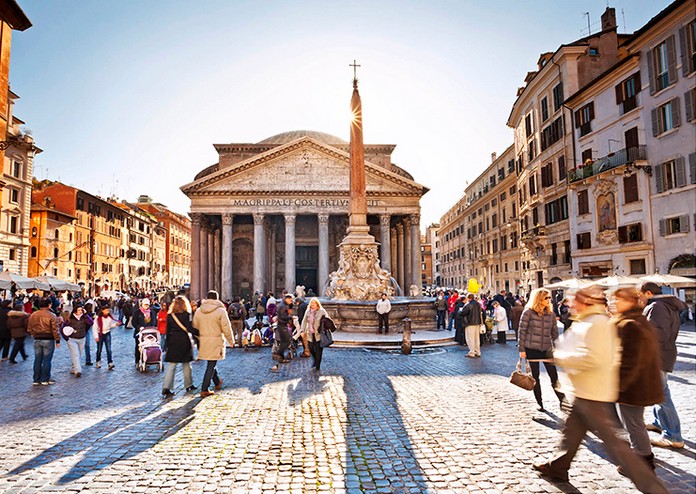
- Pros: If you want to see the sights without the crowds and get the best deals on flights and hotels, this is your season. Seeing the Pantheon on a quiet, misty morning is an experience most summer tourists will never have.
- Cons: The weather is chilly and can be rainy, and the days are shorter. You’ll definitely need to pack a warm coat, a scarf, and a good umbrella.
Whether you love the sun and crowds or want a quieter trip, choosing the right season is the first step. This helps you decide where to stay in the city.
Where Should You Stay?
A First-Timer’s Guide to Rome’s Best Neighborhoods
After choosing the perfect season, the next big decision is your Roman “home base.”
Where you live affects your daily life. It decides if your evenings are calm or full of energy. It also determines if your mornings begin with a five-minute walk to the Pantheon or a quick metro ride. For a first-timer, location is everything.
Rome is a collection of distinct neighborhoods, each with its own personality.
Choosing the right one is like picking the right travel companion. Here are four key neighborhoods first-timers should know:
- Centro Storico (Historic Center): Best for first-timers who want to walk everywhere. This is the Rome you’ve seen in movies. Staying here puts you steps away from iconic sites like the Pantheon, Piazza Navona, and the Trevi Fountain. You can wander ancient streets right from your doorstep. The trade-off? It can be the most crowded and expensive area.
- Trastevere: Best for romantics and foodies seeking atmosphere. Trastevere is located across the Tiber River. It is known for its charming buildings covered in ivy. The piazzas come alive at night with people dining and drinking. It’s the perfect place to get beautifully lost, but the vibrant nightlife can make it noisy.
- Prati: Best for a quiet, elegant stay near the Vatican. If you want to visit St. Peter’s Basilica or need a quiet place, Prati is the right choice. This orderly, upscale neighborhood feels more residential and calm, with great shopping and easy metro access. It lacks the ancient chaos, which can be a pro or a con depending on your style.
- Monti: Best for trend-seekers who want history on their doorstep. Tucked just behind the Colosseum, Monti has a hip, village-like vibe. It’s a great mix of old and new. You can explore the Roman Forum during the day. At night, you can browse artisan shops and cozy wine bars.
The choice between two popular but different areas, like Trastevere and Prati, comes down to the experience you want. Choose Trastevere if you want to enjoy beautiful cobblestone streets and lively trattorias right away. Choose Prati if you want a quiet, clean place to return to after a long day of sightseeing. The Vatican is just a short walk away.

From Airport to Attractions:
Your Guide to Rome’s Transportation
Your Roman adventure begins the moment you land. Most international travelers arrive at Fiumicino Airport (FCO). To get to the city center, you can choose between speed and cost. The fastest choice is the Leonardo Express train.
It is a non-stop ride that takes 32 minutes to Termini Station, the city’s main transport hub. It’s convenient but pricey. For a budget-friendly option, several shuttle bus companies are located right outside the terminal. They will also take you to Termini. They cost less than half as much as the train but can take an hour or more, depending on traffic.
Once you’re settled, you’ll discover that Rome’s historic core is wonderfully walkable.
For longer distances, like from the Colosseum to the Vatican, you’ll want to use public transport. The city’s metro, buses, and trams are operated by a single group, ATAC. This means one ticket works for all of them.
You can buy a ticket, or biglietto, from machines in any metro station. You can also get one at a tabaccheria, which is a tobacco shop with a big “T” sign. Most importantly, you must validate your ticket. On a bus or tram, stamp it in the small yellow or green machines on board. At the metro, the gate validates your ticket as you enter. An unstamped ticket can result in a hefty fine, an avoidable snag in an otherwise perfect day.
While the metro is useful for covering large gaps, the bus system often gets you closer to the sights. Bus line 64 is popular with tourists. It goes from Termini Station to the Vatican. The route passes many important landmarks. Just be careful with your wallet and phone. Pickpockets often target this area. A good plan is to walk as much as possible. Use one biglietto for a bus or metro ride when your feet get tired.
Is the Roma Pass Worth It?
A Simple Cost-Benefit Analysis
You’ve likely seen the Roma Pass advertised as a convenience package for both transport and attractions. The pass comes in 48- or 72-hour versions, and both give you unlimited access to the city’s public transport. The 48-hour version gives you free entry to your first museum or archaeological site. The 72-hour version includes the first two for free and offers discounts on other sites. Crucially, the Vatican Museums are not part of this program.
To determine if the Roma Pass is worth it, consider some practical math. A standard ticket for the Colosseum (which includes the Forum and Palatine Hill) costs about €18. A dedicated three-day travel pass would cost another €18. That’s a total of €36. Compare this to the Roma Pass cost (typically higher), and you might not see immediate savings. However, the real benefit of the Roma Pass is time.
Using the pass for your Colosseum entry grants you special access. This lets you skip the long ticket-buying line. Saving half a day of your vacation can be priceless.
So, who should buy it? The pass is a great deal for first-time visitors. It works well for those who will use public transport often. It is also good for people who plan to visit two major paid attractions. These include the Colosseum and the Borghese Gallery. The line-skipping perks often justify the cost. However, you should probably skip it if you love walking everywhere and plan to visit only one main attraction. It’s also not a good value for EU citizens aged 18-25, who already get heavily discounted museum tickets.
How to Conquer Ancient Rome:
The Colosseum, Forum & Palatine Hill
Tackling the heart of ancient Rome is a monumental task, but it doesn’t have to be. The Colosseum, the Roman Forum, and Palatine Hill are not three separate places. They are one large archaeological park. Your standard Colosseum tickets give you one-time access to all three areas. This makes it a single, three-part experience.
The single best tip for avoiding crowds at the Colosseum is not to start there. The ticket line at the Colosseum is legendary. Instead, go to the entrance of the Roman Forum on Via dei Fori Imperiali. The line is usually much shorter there.
You can buy your ticket there. First, explore the amazing ruins of the Forum and Palatine Hill. Then, use your ticket to enter the Colosseum through the faster “ticket-holders” line. This trick can easily save you two hours of waiting.
Timing is the next piece of the puzzle. Arrive either right when the park opens or about two to three hours before the park closes. Starting early lets you see the sights before big tour groups arrive. A visit in the late afternoon gives you lovely golden-hour light for photos and fewer people around. Either way, you’ll avoid the peak rush between 10 AM and 2 PM.
Vatican City 101: A Simple Guide to St. Peter’s, the Museums, & Sistine Chapel
Venturing into Vatican City feels like stepping into another world—because, technically, you are. It’s the smallest independent country on earth, located entirely within Rome. It’s not a single attraction but three distinct areas:
- St. Peter’s Basilica (The Church): This beautiful church features Michelangelo’s dome. It is free to enter, but you will need to wait in a security line.
- The Vatican Museums (The Art): A massive complex of galleries holding priceless art. Critically, the Sistine Chapel is located inside the museums at the very end of the tour route. Entry is paid, and you absolutely must book Vatican Museums tickets in advance.
- St. Peter’s Square (The Plaza): The iconic, sprawling square in front of the Basilica is free and open to the public.
The most important tip for your Vatican City tour is to book museum tickets online. Do this directly from the official Vatican website.
Make sure to do it several weeks before your trip. The general admission line for those without tickets can stretch for three or four hours. By booking a timed-entry ticket, you’ll walk right past that enormous queue and save half a day of precious vacation time.
Finally, entry to the most sacred sites depends entirely on what you’re wearing. The Vatican dress code is strictly enforced for both St. Peter’s Basilica and the Sistine Chapel. To avoid being turned away, ensure both your shoulders and knees are completely covered. This applies to everyone. Opt for a t-shirt or scarf to cover your shoulders, and wear pants, a longer skirt, or a dress.

What to Do in Rome for 3 Days:
The Perfect, Stress-Free Itinerary
The secret to a successful trip to Rome isn’t to see everything, but to see things in a smart, logical order. The biggest mistake visitors make is zigzagging across the city, wasting precious time and energy. This simple plan groups attractions by location, giving you a blueprint for a fantastic, low-stress visit.
This 3-day Rome itinerary maximizes your experience while minimizing travel time. Each day has a geographic theme, blending blockbuster sights with time for relaxed discovery.
- Day 1: Ancient Rome. Immerse yourself in the heart of the empire. Start your morning with your pre-booked ticket for the Colosseum, Roman Forum, and Palatine Hill. In the afternoon, enjoy a relaxing 20-minute walk to the historic center. There, you can see the Pantheon (it’s free to enter!) and toss a coin in the Trevi Fountain.
- Day 2: Vatican City & Trastevere. Dedicate your morning to the world’s smallest country. Use your advance tickets for the Vatican Museums. This will let you see the Sistine Chapel. After that, visit the beautiful St. Peter’s Basilica. After that, cross the Tiber River into Trastevere. This charming neighborhood is great for wandering through cobblestone alleys and enjoying a tasty dinner.
- Day 3: Art, Views, and Shopping. Begin your cultural experience at the Borghese Gallery and Museum. Remember to book your tickets in advance because they sell out fast! After that, take a walk in the nearby park. Then, head to the Spanish Steps for some great people-watching. From there, you’re at the top of Via del Corso, Rome’s main shopping street, ideal for an afternoon of retail therapy.
This plan provides a reliable guide to what to do in Rome over 3 days while still leaving room for spontaneous moments. It has a good mix of historical sites and open spaces. This makes for great family-friendly activities in Rome.
If Renaissance art isn’t your thing, swap the Borghese Gallery for a food tour or a cooking class. The goal is to give your days a focus, not a rigid schedule.
Don’t Leave Rome Without Trying These 5 Authentic Dishes
In Rome, discovering the perfect plate of pasta is as essential as visiting the Colosseum. For a cozy, traditional experience, look for a trattoria.
This is a casual, often family-run place that serves classic recipes. For a more refined dining experience, book a table at a ristorante.
True Roman cooking is simple, proud, and built around a few core ingredients, especially the city’s legendary pastas. To eat like a local, try the “four great Roman pastas,” some of the best authentic Italian food you’ll ever have.
- Carbonara: The undisputed king. It’s made with egg, sharp Pecorino Romano cheese, black pepper, and crispy guanciale (cured pork cheek). You won’t find any cream here—the silky sauce comes from the egg and cheese alone.
- Cacio e Pepe: Deceptively simple and divine. This dish uses just two ingredients besides the pasta: Pecorino Romano cheese and black pepper.
- Amatriciana: A rich and savory tomato sauce, made famous by the addition of guanciale and a sprinkle of pecorino.
- Gricia: This dish is often called a “white Amatriciana.” It is the original version, using guanciale, pecorino, and black pepper. It does not include tomato or egg.
Make sure to try a supplì for a quick snack. It is a ball of risotto rice filled with melted mozzarella. The ball is breaded and fried.
And for a pick-me-up, embrace the Italian coffee ritual. Head to any counter labeled “Bar,” order “un caffè,” and drink the powerful shot of espresso standing at the counter.

10 Quick Tips for a Perfect Roman Holiday
Beyond knowing what to eat, a few local secrets can help you navigate Rome with confidence. These simple habits will help you focus on enjoying the city’s magic.
- Guard Your Goods. In crowded areas like the metro or near major monuments, wear your backpack on your front and keep a hand on your purse. It’s a simple habit that deters opportunistic pickpockets.
- Drink from the “Big Noses.” Carry a reusable water bottle! Rome is famous for its free, clean, and delicious drinking water, which flows from public fountains called nasoni (big noses).
- Greet with a Smile. Always greet shopkeepers and restaurant staff with a friendly Buongiorno (good day) when you enter and a Grazie (thank you) when you leave.
- Understand the Coperto. This small fee on your restaurant bill is not a scam. It’s a standard per-person cover charge for bread and table service, common throughout Italy.
- Book Your Tickets Online. Never wait in line for the Colosseum or Vatican Museums. Booking your tickets online for a specific time slot is essential and will save you hours.
- Wear Comfortable Shoes. This can’t be stressed enough. Rome is a city for walking, and its beautiful cobblestone streets are unforgiving. Prioritize comfort over style.
- Validate Your Transit Ticket. When you take a bus or tram, you must stamp your ticket in the validation machine on board. Riding with an unstamped ticket can result in a hefty fine.
- Tipping is Optional. Unlike in the U.S., tipping is not expected. If you received exceptional service, rounding up the bill or leaving one or two euros is a generous gesture.
- Stand for Coffee. Want coffee like a Roman? Order and drink your espresso standing at the bar (al banco). It’s quicker, cheaper, and part of the local ritual.
- Mind the Dress Codes. When visiting St. Peter’s Basilica or other churches, be respectful. Both men and women must have their shoulders and knees covered to enter.
Need a Break from the City?
Easy Day Trips from Rome by Train
After a few days in Rome, you might crave a change of pace. Some of Italy’s most incredible sights are just a short train ride away. Two of the best day trips from Rome by train offer completely different experiences.
For a journey back in time without the massive crowds of Pompeii, head to Ostia Antica. Just a 30-minute local train ride away, this was the ancient harbor city of Rome.
You can spend hours exploring well-preserved apartments, bakeries, and theaters. This gives you a true sense of daily life in Rome. It’s a vast, park-like site that makes for a refreshingly calm and fascinating escape.
If you’re craving a different slice of Italy, the stunning hill town of Orvieto is a perfect match. Perched dramatically on a volcanic plug of rock, it’s about a 75-minute train trip from Rome. The main attraction is its stunning Gothic cathedral.
However, the real joy comes from wandering its narrow alleys. You can enjoy beautiful views of the Umbrian countryside and have a leisurely lunch. An escape to Ostia Antica or Orvieto offers a perfect, easy-to-plan breather.
Your Rome Action Plan:
5 Key Takeaways for an Unforgettable Trip
Planning a trip to Rome should feel like an exciting path forward, not an overwhelming puzzle. With a smart plan, you can explore the city with ease. Choose the right season, find your ideal neighborhood, and create a schedule that saves time and reduces stress.
Here is your final action plan, a simple checklist of the most critical steps:
- Book major tickets (the Vatican, the Colosseum) online in advance.
- Choose your neighborhood wisely based on your travel style.
- Pack your most comfortable shoes—you’ll need them!
- Group your sightseeing by area to avoid backtracking.
- Relax and give yourself permission to get a little lost.
The best planning gives you the freedom to forget the plan.
Once you arrive, enjoy that surprise scoop of gelato. Explore a charming alleyway to see where it goes. Let the Eternal City work its magic on you. You’ve got this.
Rome Travel Guide FAQs
When is the best time to visit Rome?
The best time to visit Rome is during spring (April to June) and early autumn (September to October). The weather is warm but not extreme, crowds are manageable, and major attractions are fully open. Summer can be very hot and crowded, while winter offers fewer tourists and lower hotel prices, making it ideal for budget travelers.
How many days do you need in Rome?
Most travelers need 3 to 4 days in Rome to see the main highlights without rushing. This allows time to explore the Colosseum, the Vatican Museums, the Trevi Fountain, the Pantheon, and Trastevere while also enjoying local food and hidden streets. With 5 days, you can add day trips to Tivoli or Pompeii.
What are the top things to see in Rome?
The top things to see in Rome include the Colosseum, Roman Forum, Pantheon, Trevi Fountain, Spanish Steps, Vatican Museums, and St. Peter’s Basilica. These landmarks showcase Rome’s ancient history, Renaissance art, and vibrant street life. Booking skip-the-line tickets is recommended, especially during peak tourist seasons.
Is Rome Safe for Tourists?
Yes, Rome is generally safe for tourists, especially in central areas and major attractions. Violent crime is rare, and most safety concerns involve petty theft, such as pickpocketing, in crowded places like Termini Station or public transport. Staying alert, keeping valuables secure, and avoiding obvious scams is usually enough for a trouble-free trip.
What is the best way to get around Rome?
The best way to get around Rome is a mix of walking and public transportation. Many attractions are within walking distance in the historic center. Rome’s metro, buses, and trams are affordable and reliable, though they can be crowded. Taxis and ride apps are safe options at night or when traveling with luggage.
Is Rome expensive for tourists?
Rome can fit a range of budgets. While entrance tickets and central hotels may be expensive, affordable restaurants, free landmarks, and public fountains help keep daily costs reasonable. Booking accommodations in advance and visiting outside peak summer months can significantly reduce overall travel expenses.