The border between Colombia and Venezuela has become dangerous because of crime, poverty, migration, and political tension. Many people cross this border to find food, work, medicine, or safety.
In some areas, armed groups, smugglers, and criminal gangs control illegal routes. These groups can be involved in fuel smuggling, drug trafficking, and human trafficking. Even legal crossings can become crowded and tense. For ordinary people, this border can be risky because the situation changes quickly. A peaceful crossing one day may become unsafe the next.
Sudan – South Sudan Border
Sudan and South Sudan share one of the most unstable borders in Africa. South Sudan became independent in 2011, but many border problems remained unsolved.
Some areas are disputed, especially places with oil, land, and grazing routes. Armed groups and local militias have often operated near the border. People living there can face violence, displacement, and food shortages. The danger is not only from armies. It also comes from local conflicts, weak government control, and the long effects of civil war.
Armenia – Azerbaijan Border
The border between Armenia and Azerbaijan is dangerous because of a long political and military conflict. The two countries have fought over territory for decades, especially around Nagorno-Karabakh.
Even when the full war stops, the border can remain tense. Soldiers watch each other from mountain positions, and small clashes can happen. Some areas also contain landmines and unexploded weapons. The landscape is beautiful, with mountains and valleys, but the political situation makes parts of this border very risky.
Russia – Ukraine Border
Since Russia’s full-scale invasion of Ukraine in 2022, the Russia–Ukraine border has become one of the most dangerous border zones in the world. This is not just a tense frontier. In many places, it is connected to an active war.
Military attacks, drones, artillery, mines, and destroyed roads make the area extremely dangerous. For civilians, the risk is very high. Many towns near the border have been damaged, and movement is heavily restricted. This border shows how quickly a political line can become a battlefield.
United States – Mexico Border
The border between the United States and Mexico is not a war zone, but parts of it can still be dangerous. The danger comes mostly from organized crime, drug cartels, human smuggling, and harsh desert conditions.
Many migrants try to cross remote areas with extreme heat, little water, and difficult terrain. Criminal groups may also control some illegal crossing routes. At the same time, the border is heavily monitored by patrols, fences, cameras, and checkpoints. The risk depends greatly on the exact location.
Saudi Arabia – Yemen Border
The Saudi Arabia–Yemen border is dangerous because of the long war in Yemen. The border area has seen military activity, missile attacks, smuggling, and armed movement.
Yemen has suffered one of the world’s worst humanitarian crises. Near the border, civilians can face danger from fighting, poverty, and lack of basic services. Saudi Arabia has built barriers and increased security in some areas. Still, the region remains tense because of the conflict inside Yemen.
Turkey – Syria Border
The Turkey–Syria border became extremely dangerous after the Syrian civil war began in 2011. Millions of refugees have crossed into Turkey, while armed groups have operated in northern Syria.
This border has seen military operations, terrorism threats, smuggling, and refugee crises. Some parts are heavily fenced and guarded. For local people, the danger comes from unstable security, nearby fighting, and the movement of armed groups. Although some areas are controlled more strictly today, the border remains sensitive.
Afghanistan – Pakistan Border
The Afghanistan–Pakistan border is one of the most difficult and dangerous borders in Asia. It runs through mountains, tribal areas, and remote valleys. The border has long been connected with militant groups, smuggling, and political tension.
Pakistan and Afghanistan have often disagreed about security and border control. Crossings can close suddenly, and clashes can happen. For traders, families, and local communities, this creates fear and hardship. The rough mountain terrain makes the border even harder to control.
India – Pakistan Border
The India–Pakistan border is one of the most heavily guarded borders in the world. The most dangerous part is the Line of Control in Kashmir. India and Pakistan are both nuclear-armed countries.
This makes every clash more serious. Soldiers from both sides watch each other closely, and small incidents can quickly become major news. There have been shootings, shelling, militant attacks, and political crises in this region. Even during peaceful periods, the border remains tense and heavily militarized.
North Korea – South Korea Border
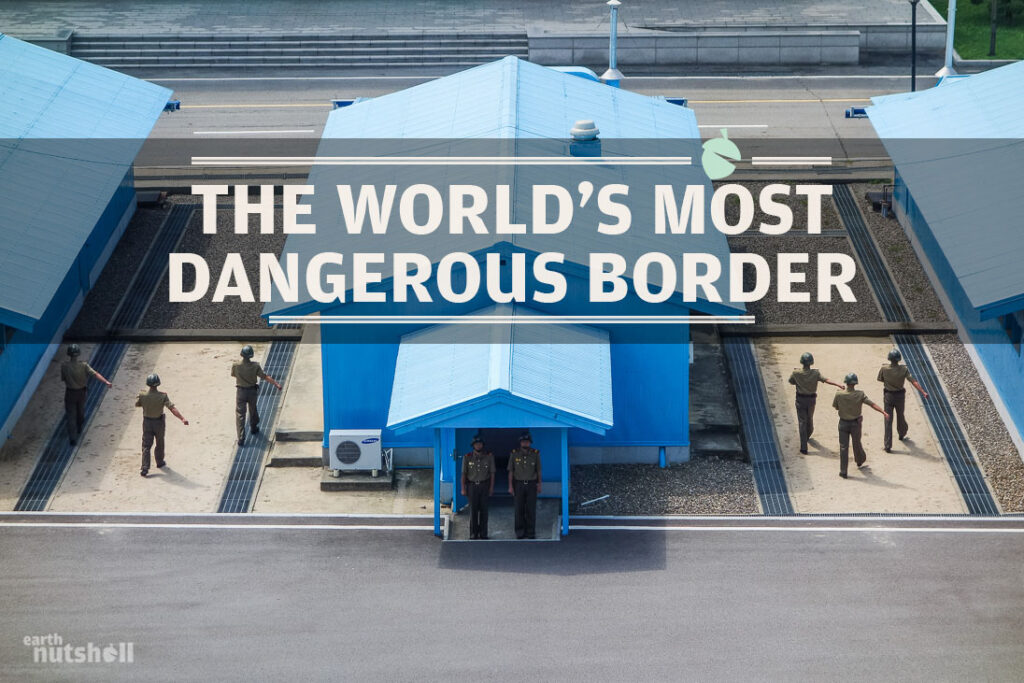
The border between North Korea and South Korea is called the Demilitarized Zone, or DMZ. Despite its name, it is one of the most militarized borders on Earth. The Korean War ended with an armistice in 1953, not a full peace treaty.
This means the two Koreas are still technically in a state of war. The DMZ has fences, landmines, guard posts, soldiers, and strict rules. Very few people can enter it. Any mistake near this border can create serious tension. It is dangerous because it separates two countries with very different systems, strong armies, and a long history of mistrust.